
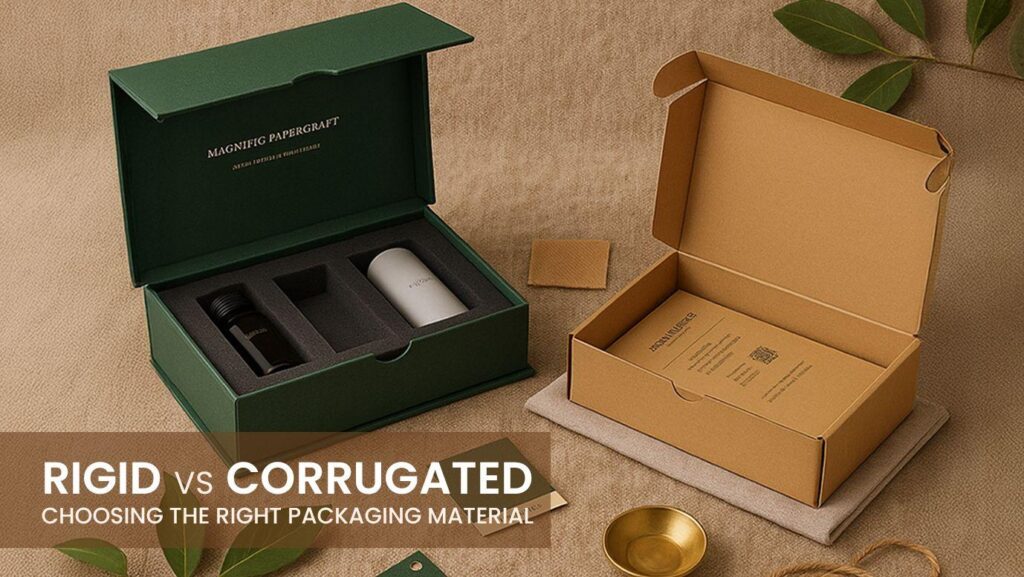
The right packaging can affect product protection, shipping costs, customer experience, and brand presentation. Two widely used options are rigid boxes vs corrugated boxes. Although both are used for product packaging, they are designed for different purposes.
This guide explains the differences between rigid and corrugated boxes, their advantages and disadvantages, common applications, and how businesses can choose the right option.
What Are Rigid Boxes?
Rigid boxes are sturdy, premium-style boxes manufactured from thick paperboard or chipboard. Unlike folding cartons, rigid boxes generally maintain their shape and are not designed to be folded flat after production.
They are commonly used when presentation, durability, and premium branding are important.
Examples include:
- Luxury gift boxes
- Cosmetic packaging
- Jewelry boxes
- Smartphone and electronics packaging
- Premium food packaging
- Perfume boxes
- Subscription and promotional boxes
Rigid packaging can be covered with printed paper, textured materials, foil, embossing, debossing, or other finishing options.
Key Features of Rigid Boxes
- Strong and durable construction
- Premium appearance
- Excellent branding opportunities
- Available in custom shapes and sizes
- Suitable for high-value products
- Can include inserts and compartments
- Generally more expensive than standard corrugated packaging
What Are Corrugated Boxes?
Corrugated boxes are shipping and transport boxes made from corrugated fiberboard. They consist of one or more layers of fluted paper sandwiched between liner sheets.
The fluted layer creates cushioning and improves the box’s strength while keeping the packaging relatively lightweight.
Corrugated boxes are widely used for:
- E-commerce shipping
- Moving and storage
- Industrial products
- Food and beverage transportation
- Retail distribution
- Electronics shipping
- Subscription boxes
- Wholesale packaging
Different corrugated board grades, flute profiles, and paper weights can be selected according to the product’s protection requirements.
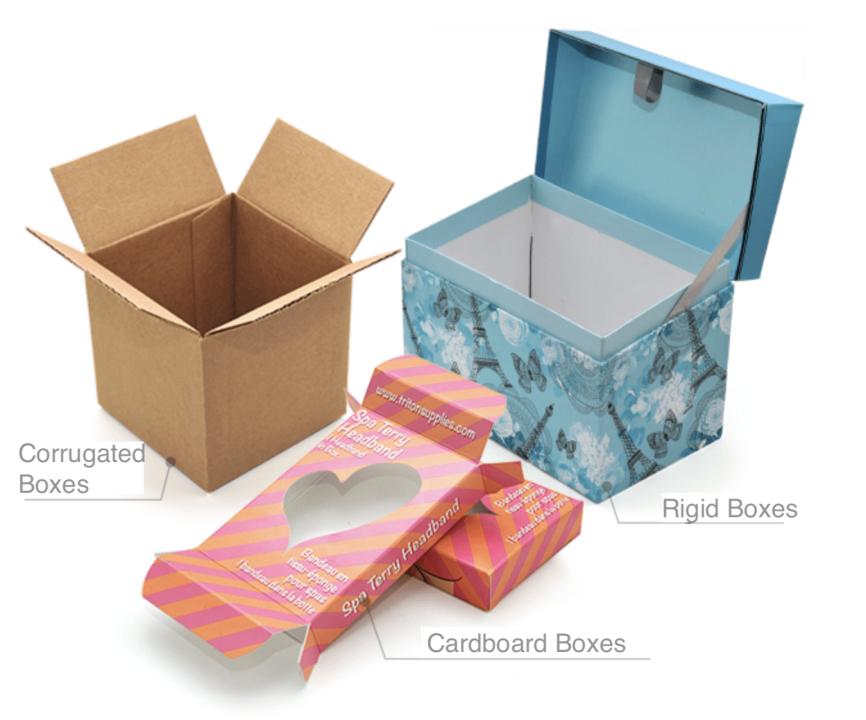
Rigid vs Corrugated Boxes: Key Differences
The most important difference is their primary purpose.
Rigid boxes are generally focused on presentation and premium product packaging, while corrugated boxes are particularly useful for shipping, transportation, stacking, and protection.
| Feature | Rigid Boxes | Corrugated Boxes |
|---|---|---|
| Construction | Thick, rigid paperboard/chipboard | Fluted paper between liner sheets |
| Main purpose | Premium presentation | Shipping and protection |
| Durability | High structural rigidity | High impact and compression resistance |
| Appearance | Premium and luxurious | Practical and customizable |
| Cost | Generally higher | Generally more economical |
| Shipping | Less efficient for some applications | Excellent for shipping |
| Custom printing | Excellent | Excellent |
| Storage | Takes more space | Many styles can be stored flat |
| Inserts | Excellent | Available |
| E-commerce | Suitable for premium products | Very common |
| Sustainability | Depends on materials and coatings | Widely recyclable when properly designed |
Actual performance varies according to board grade, construction, dimensions, closures, coatings, and manufacturing specifications.
1. Durability and Product Protection
Both packaging types can provide strong protection, but they protect products in different ways.
Corrugated boxes are particularly effective for shipping because their fluted structure can absorb some impact and resist compression. Businesses can choose different board constructions depending on the weight and fragility of the product.
Rigid boxes, on the other hand, provide a strong outer structure and are often used for products that require a premium presentation. Their solid construction can help protect the product from crushing and handling damage.
For products moving through parcel networks, however, packaging should be selected based on the actual distribution environment rather than simply choosing the thickest box.
2. Cost Comparison
If cost is a major consideration, corrugated boxes are often the practical choice for large-scale shipping and distribution.
Rigid boxes require more material, specialized construction, and additional manufacturing steps. Features such as magnetic closures, specialty papers, foil stamping, and custom inserts can increase the cost further.
Corrugated packaging can also be highly customized, but standard shipping designs are generally easier to manufacture at scale.
Choose corrugated when:
- You ship large quantities.
- Packaging cost needs to remain controlled.
- Products require protective shipping.
- Boxes need to be stored flat.
- You operate an e-commerce or distribution business.
Consider rigid boxes when:
- The product has a premium price point.
- Presentation is a major part of the customer experience.
- Packaging is intended to be reused.
- Your brand relies heavily on luxury positioning.
3. Branding and Customer Experience
Rigid boxes have a significant advantage when the packaging itself is part of the product experience.
Luxury brands can use:
- Embossed logos
- Debossed designs
- Foil stamping
- Premium textures
- Magnetic closures
- Ribbon pulls
- Custom inserts
- Specialty finishes
These features can make opening the package feel more sophisticated.
Corrugated boxes can also be professionally branded. Businesses can use custom printing, logos, colors, patterns, labels, and inside-the-box messaging.
For example, an e-commerce business might print its logo and brand message on a corrugated mailer box to create a recognizable unboxing experience.
4. Shipping and E-Commerce Applications
For online businesses, corrugated boxes are one of the most practical packaging solutions.
They are available in numerous sizes and configurations and can be designed for products ranging from clothing and books to electronics and food products.
Their relatively low weight can also help businesses manage shipping costs, although actual shipping charges depend on dimensions, weight, carrier rules, and destination.
Rigid boxes can also be used for e-commerce, especially for premium products such as cosmetics, watches, jewelry, electronics, and gift sets.
A common strategy is to use a premium rigid box as the primary product package and an outer corrugated box as the shipping package.
This combination allows brands to achieve both presentation and transportation protection.
5. Sustainability Considerations
Neither rigid nor corrugated packaging should automatically be described as “eco-friendly.” Sustainability depends on the materials, manufacturing process, coatings, adhesives, printing, transportation, and end-of-life options.
Corrugated boxes have a well-established recycling stream in many markets because paper-based corrugated fiberboard can generally be recovered through paper recycling systems.
Rigid boxes can also be made from paper-based materials and may be recyclable, but certain coatings, laminations, foils, magnets, plastics, or mixed-material components can affect recyclability.
Businesses looking for more sustainable packaging should evaluate:
- Recycled content
- Recyclability
- Material weight
- Packaging-to-product ratio
- Printing and coatings
- Responsible fiber sourcing
- Transportation efficiency
- Reusability
- Local recycling infrastructure
The best packaging decision should consider the whole packaging lifecycle, not simply the material name.
6. Customization Options
Both packaging formats offer extensive customization.
Rigid Box Customization
Rigid boxes can be manufactured in styles such as:
- Magnetic closure boxes
- Drawer boxes
- Two-piece boxes
- Book-style boxes
- Shoulder-neck boxes
- Folding rigid boxes
They can also include foam, paperboard, molded-pulp, or other inserts depending on product requirements.
Corrugated Box Customization
Corrugated boxes can be customized through:
- Size and dimensions
- Board grade
- Flute profile
- Printing
- Die-cut shapes
- Handles
- Inserts
- Windows
- Self-locking structures
This makes corrugated packaging suitable for both standard shipping and highly customized product applications.
Rigid vs Corrugated Boxes: Which One Should You Choose?
There is no universal answer. Your choice should be based on the requirements of the product and supply chain.
Choose rigid boxes if your priority is:
- Premium presentation
- Luxury branding
- High-end customer experience
- Reusable packaging
- Product presentation at retail
- Premium gift packaging
Choose corrugated boxes if your priority is:
- Shipping protection
- E-commerce fulfillment
- Cost-efficient packaging
- Warehousing and distribution
- Lightweight transport packaging
- Large-volume packaging
For many businesses, the answer is both.
A brand can place a product inside a rigid box and then use a corrugated shipping carton to protect the premium package during transportation.
Frequently Asked Questions
Are rigid boxes stronger than corrugated boxes?
Not necessarily. Rigid boxes are structurally stiff, while corrugated boxes are engineered with fluting to provide strength and cushioning. The appropriate board grade and construction should be selected according to the product and distribution conditions.
Are corrugated boxes cheaper than rigid boxes?
In many standard applications, yes. Corrugated boxes are commonly used for high-volume shipping because they can provide effective protection at relatively economical material and manufacturing costs.
Are rigid boxes recyclable?
Many paperboard rigid boxes can be recyclable, but recyclability depends on the specific materials and components used. Laminations, coatings, magnets, foils, and mixed materials may affect recycling.
Which box is better for e-commerce?
Corrugated boxes are commonly used for e-commerce shipping because they offer protection, customization, and efficient storage. Premium e-commerce products may also use rigid boxes inside a protective shipping carton.
Can a rigid box be used for shipping?
Yes, but businesses should consider the entire shipping environment. A rigid product box may need an additional outer shipping carton to protect its appearance from scratches, impacts, moisture, and handling.
Can corrugated boxes look premium?
Yes. High-quality printing, custom die-cutting, inserts, structural design, and branded graphics can make corrugated packaging visually appealing while maintaining its shipping functionality.
Final Thoughts
The rigid vs corrugated boxes decision ultimately comes down to what your packaging needs to accomplish.
Rigid boxes are well suited to premium presentation, luxury products, and memorable unboxing experiences. Corrugated boxes are particularly practical for shipping, e-commerce, transportation, and distribution.
For many brands, combining both provides the most practical approach: use rigid packaging to present the product and corrugated packaging to protect it during delivery.
Before placing a packaging order, compare product weight, dimensions, fragility, shipping conditions, order volume, budget, branding requirements, storage space, and end-of-life considerations. Working with an experienced packaging supplier can also help you select the appropriate board construction and box style for your specific application.