
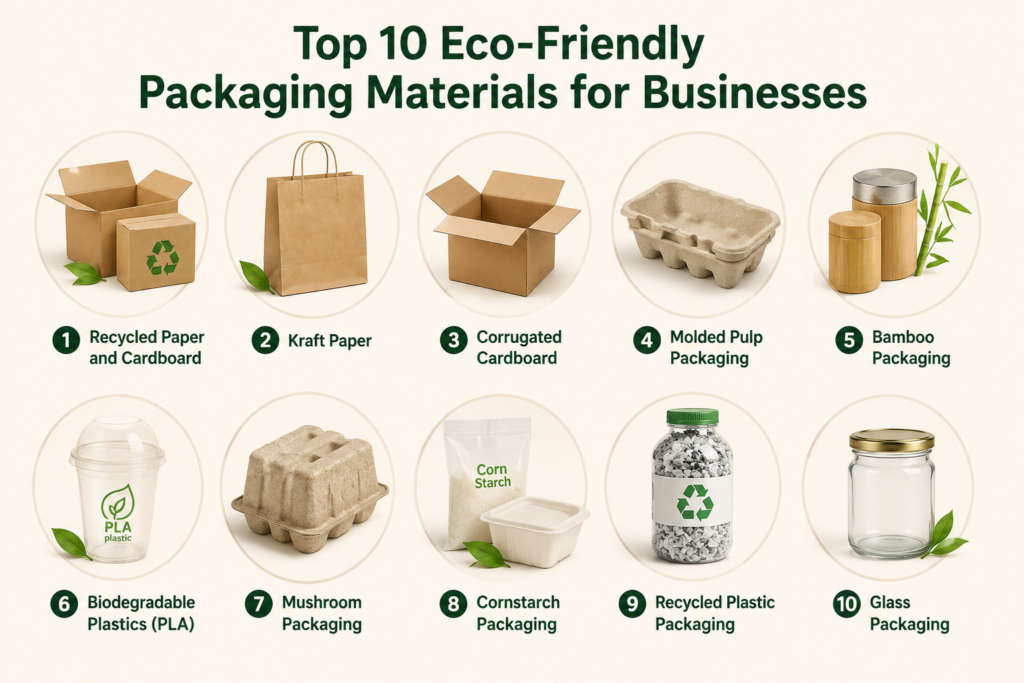
Eco-friendly packaging materials are sustainable alternatives to traditional packaging. These materials are typically recyclable, biodegradable, compostable, reusable, or made from renewable resources such as paper, cardboard, bamboo, cornstarch, and plant-based fibers. It help businesses reduce waste, lower their environmental impact, and meet growing consumer demand for greener products.
As environmental regulations become stricter and customers increasingly prefer brands with sustainable practices. Businesses are actively searching for packaging solutions that balance product protection, affordability, and environmental responsibility. Whether you’re an e-commerce retailer, food manufacturer, cosmetic brand, or wholesale distributor, choosing the right eco-friendly packaging material can improve your brand image, support sustainability goals, and enhance customer trust.
In this guide, we’ll explore the top 10 eco-friendly packaging materials for businesses in 2026, their benefits, applications, and factors to consider when selecting sustainable packaging solutions.
Top 10 Eco-Friendly Packaging Materials
1. Recycled Paper and Cardboard
Recycled paper and cardboard remain among the most widely used sustainable packaging materials.
Benefits
- Highly recyclable
- Cost-effective
- Lightweight
- Customizable with printing and branding
- Reduces demand for virgin materials
Common Uses
- Shipping boxes
- Folding cartons
- Product packaging
- Retail packaging
- Inserts and dividers
Best For
E-commerce businesses, retail brands, food packaging, and consumer goods manufacturers.
2. Kraft Paper
Kraft paper is produced using a process that retains the strength of wood fibers, making it durable and environmentally friendly.
Benefits
- Biodegradable
- Recyclable
- Renewable resource
- Strong and durable
- Natural appearance that appeals to eco-conscious consumers
Common Uses
- Shopping bags
- Food wraps
- Mailing envelopes
- Product packaging
Best For
Retail stores, restaurants, bakeries, and e-commerce packaging.
3. Corrugated Cardboard
Corrugated cardboard is one of the most sustainable options for shipping and transportation packaging.
Benefits
- Made from renewable resources
- Recyclable and reusable
- Excellent product protection
- Lightweight yet strong
Common Uses
- Shipping cartons
- Subscription boxes
- Protective packaging
- Bulk transportation packaging
Best For
Manufacturers, wholesalers, and online retailers.
4. Molded Pulp Packaging
Molded pulp is made from recycled paper fibers and is gaining popularity as a replacement for plastic inserts.
Benefits
- Biodegradable
- Compostable
- Recyclable
- Excellent cushioning properties
Common Uses
- Electronics packaging
- Egg cartons
- Protective inserts
- Beverage trays
Best For
Businesses looking to eliminate plastic packaging components.
5. Bamboo Packaging
Bamboo is one of the fastest-growing renewable resources on the planet.
Benefits
- Rapidly renewable
- Biodegradable
- Durable and lightweight
- Attractive natural appearance
Common Uses
- Cosmetic packaging
- Food containers
- Luxury packaging
- Retail packaging
Best For
Beauty brands, premium products, and sustainable lifestyle businesses.
6. Biodegradable Plastics (PLA)
PLA (Polylactic Acid) is made from renewable plant-based resources such as corn starch or sugarcane.
Benefits
- Reduced reliance on fossil fuels
- Compostable under industrial conditions
- Suitable for food contact
- Lower carbon footprint than traditional plastics
Common Uses
- Food containers
- Cups
- Packaging films
- Disposable utensils
Best For
Food service businesses and consumer packaged goods companies.
7. Mushroom Packaging
Mushroom packaging is created using agricultural waste and mycelium, the root structure of mushrooms.
Benefits
- Fully compostable
- Naturally biodegradable
- Excellent shock absorption
- Renewable and sustainable
Common Uses
- Protective packaging
- Electronics packaging
- Furniture packaging
Best For
Businesses seeking innovative and highly sustainable alternatives to foam packaging.
8. Cornstarch Packaging
Cornstarch-based packaging offers an eco-friendly alternative to conventional plastic.
Benefits
- Biodegradable
- Renewable source material
- Compostable
- Reduced environmental impact
Common Uses
- Packaging peanuts
- Food containers
- Bags
- Protective packaging
Best For
Food businesses and e-commerce companies.
9. Recycled Plastic Packaging
While reducing plastic use is important, recycled plastic can help minimize waste and support a circular economy.
Benefits
- Diverts plastic from landfills
- Durable and lightweight
- Recyclable in many regions
- Lower environmental impact than virgin plastic
Common Uses
- Bottles
- Containers
- Flexible packaging
- Shipping materials
Best For
Companies transitioning toward more sustainable packaging solutions.
10. Glass Packaging
Glass remains one of the most sustainable packaging materials due to its ability to be recycled indefinitely.
Benefits
- 100% recyclable
- Reusable
- Non-toxic
- Preserves product quality
Common Uses
- Food packaging
- Beverage packaging
- Cosmetic packaging
- Pharmaceutical products
Best For
Premium products and brands focused on long-term sustainability.
Comparison Table of Eco-Friendly Packaging Materials
| Material | Recyclable | Biodegradable | Compostable | Best Use |
| Recycled Paper | Yes | Yes | Yes | Product Boxes |
| Kraft Paper | Yes | Yes | Yes | Bags & Wraps |
| Corrugated Cardboard | Yes | Yes | Yes | Shipping Boxes |
| Molded Pulp | Yes | Yes | Yes | Protective Inserts |
| Bamboo | Limited | Yes | Yes | Premium Packaging |
| PLA Plastic | Limited | No | Yes | Food Packaging |
| Mushroom Packaging | No | Yes | Yes | Protective Packaging |
| Cornstarch Packaging | No | Yes | Yes | Food Containers |
| Recycled Plastic | Yes | No | No | Bottles & Containers |
| Glass | Yes | No | No | Food & Beverage |
How to Choose the Right Eco-Friendly Packaging Material
When selecting sustainable packaging, consider:
- Product Protection
Ensure the material can adequately protect products during storage and shipping.
- Cost
Balance sustainability goals with packaging budgets and operational costs.
- Customer Expectations
Understand what your target audience values most regarding sustainability.
- Supply Chain Requirements
Consider storage, transportation, and production compatibility.
- Environmental Goals
Choose materials that align with your company’s sustainability objectives.
Benefits of Switching to Eco-Friendly Packaging
Businesses that adopt sustainable packaging often experience:
- Improved brand reputation
- Increased customer trust
- Better market differentiation
- Reduced environmental impact
- Greater compliance with sustainability regulations
- Enhanced customer loyalty
- Opportunities for long-term cost savings
As sustainability continues to influence purchasing decisions, eco-friendly packaging can become a competitive advantage for businesses of all sizes.
Conclusion
Eco-friendly packaging materials are transforming the way businesses package, ship, and present their products. Options such as recycled paper, kraft paper, corrugated cardboard, molded pulp, bamboo, PLA, mushroom packaging, cornstarch packaging, recycled plastic, and glass provide sustainable alternatives to traditional packaging materials.
The best choice depends on your product type, budget, sustainability goals, and customer expectations. By investing in environmentally responsible packaging solutions, businesses can reduce waste, strengthen their brand image, and contribute to a more sustainable future.
Frequently Asked Questions (FAQs)
- What is the most eco-friendly packaging material?
There is no single best option for every business. Recycled paper, kraft paper, molded pulp, and mushroom packaging are among the most sustainable choices due to their recyclability and biodegradability.
- Is eco-friendly packaging more expensive?
Some sustainable materials may have higher upfront costs, but many businesses offset these expenses through improved brand value, customer loyalty, and operational efficiencies.
- What packaging material is best for food products?
Kraft paper, PLA packaging, molded pulp, and compostable food containers are commonly used for sustainable food packaging applications.
- Can eco-friendly packaging protect products during shipping?
Yes. Materials such as corrugated cardboard, molded pulp, and mushroom packaging offer excellent protection while remaining environmentally responsible.
- What is the difference between biodegradable and compostable packaging?
Biodegradable packaging breaks down naturally over time, while compostable packaging decomposes under specific composting conditions and leaves no harmful residue.
- Why are businesses switching to sustainable packaging?
Businesses are adopting eco-friendly packaging to reduce environmental impact, meet consumer demand, improve brand reputation, and comply with sustainability regulations.
- Which industries benefit most from eco-friendly packaging?
Industries such as food and beverage, cosmetics, e-commerce, retail, pharmaceuticals, and consumer goods are among the biggest adopters of sustainable packaging solutions.